
Perfect Greek Coffee
Types, Traditions, and How to Prepare Them
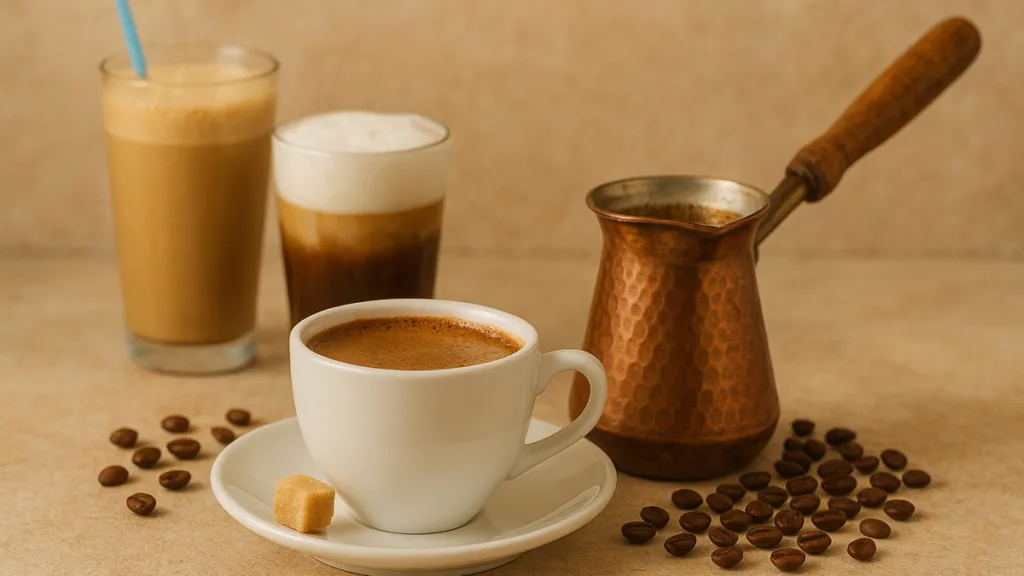
Greek coffee Kavala cafés serve is a daily ritual — whether you prefer a strong ellinikos, a creamy freddo cappuccino or a refreshing frappe.
Greek coffee is more than just a drink — it is a beloved daily ritual that brings people together in kafeneions and modern cafés across Kavala and all of Greece.
If you’ve ever wondered what makes coffee in Greece so unique, this article will take you on a flavorful journey through the country’s most beloved brews, their history, and how you can prepare them at home.
The Role of Greek Coffee
Coffee is not just a drink in Greece – it’s a ritual. From morning chats at the local kafeneio to long afternoons spent in seaside cafés, coffee brings people together. A cup of coffee can last for hours, often accompanied by heated political debates, gossip, or a quiet moment of reflection.
In fact, Greece is among the top coffee-consuming nations in Europe. What makes it truly fascinating is the variety of coffee styles available, many of which reflect both tradition and modern lifestyle.
The Most Popular Types of Greek Coffee
Here are the main types of coffee you’ll encounter in Greece:
| Coffee Type | Description | When to Drink |
|---|---|---|
| Ellinikós kafés (Greek coffee) | Strong, unfiltered coffee boiled in a small pot (briki), served in a tiny cup with foam (kaimaki). | Morning or after meals |
| Frappe | Instant coffee shaken with cold water, sugar, and sometimes milk, topped with foam. A Greek invention from the 1950s. | Summer, all day |
| Freddo Espresso | Double espresso shaken with ice until frothy. | Summer, mornings |
| Freddo Cappuccino | Espresso over ice, topped with thick cold milk foam. | Summer, afternoons |
| Filter coffee | Similar to American drip coffee, often served in larger mugs. | Breakfast or office breaks |
How to Prepare Greek Coffee Step by Step
Making authentic Greek coffee at home is simple but requires attention:
- Measure water – Use the small demitasse cup to fill your briki.
- Add coffee and sugar – Typically one heaping teaspoon per cup, plus sugar if desired (sketos = no sugar, metrios = medium, glykos = sweet).
- Stir well before heating – This prevents clumps.
- Heat slowly – Place on low heat and do not stir again.
- Watch for the foam – Just before boiling, the foam (kaimaki) rises. Remove quickly.
- Serve carefully – Pour into the cup, grounds and all, and let it settle for a moment before drinking.
Frappe vs. Freddo – The Icons of Summer
No discussion of coffee in Greece is complete without mentioning its cold classics.
- Frappe: Invented in Thessaloniki in 1957, this instant-coffee drink became a national symbol. It’s cheap, easy, and endlessly customizable.
- Freddo Espresso & Freddo Cappuccino: These modern favorites are made with espresso machines, catering to younger generations. They are smoother, richer, and have largely replaced the Frappe in trendy cafés.
“You can’t walk through Kavala’s promenade in summer without seeing nearly every table topped with a tall glass of Freddo.”
Where to Experience Authentic Greek Coffee
If you’re visiting Greece, here are some tips for the best coffee experience:
- Traditional kafeneio – For the classic Greek coffee with locals playing backgammon.
- Modern cafés – Perfect for Freddo and specialty espresso.
- By the sea – Coffee with a view is part of the lifestyle in Kavala, Thessaloniki, or any island port.
Final Thoughts
Coffee in Greece is more than caffeine – it’s culture, identity, and community in a cup. From the traditional ellinikós to the refreshing freddo cappuccino, each style tells a story about the country’s past and present.
So next time you sit down in a Greek café, take your time. Sip slowly, enjoy the foam, watch the sea, and understand why for Greeks, coffee is never rushed.
learn more about greek food culture
Greek Coffee Around the World
Greek coffee has gained international recognition as one of the world’s most distinctive coffee traditions. Similar to Turkish coffee in preparation but uniquely Greek in culture and identity, it has been studied by food historians and celebrated by coffee enthusiasts globally. If you want to dive deeper into the science and culture behind Greek coffee, the Wikipedia article on Greek coffee and resources from the Specialty Coffee Association offer fascinating further reading on this beloved brew.
Whether you enjoy it strong and unfiltered in a traditional copper briki or iced and frothy as a freddo espresso, Greek coffee is an experience that connects people, slows down time, and celebrates the art of conversation. Next time you visit Kavala, take a seat at a waterfront café and savour a cup – it may just become your favourite ritual too.
Greek coffee in Kavala is best enjoyed slowly, sitting at a seafront café watching the world go by.
Greek coffee Kavala locals drink comes in many forms — each with its own tradition and the perfect accompaniment to good conversation.
Related: Greek Food Culture | Farmer Markets in Kavala | Kavala FAQ