
Aqueduct Kavala
Explore This Iconic Landmark
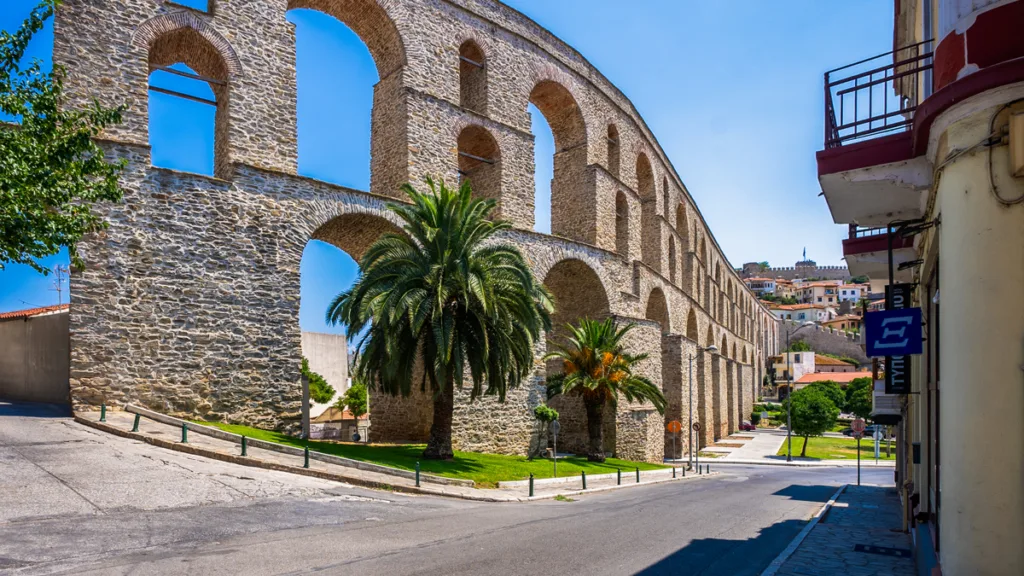
The aqueduct Kavala is known for — locally called the Kamares — is one of Greece’s most spectacular Ottoman-era landmarks. In this article, you’ll discover its fascinating history and impressive architecture, and understand why this aqueduct Kavala built during the reign of Suleiman the Magnificent remains so iconic today.
The Aqueduct Kavala: A Historical Overview
The Aqueduct of Kavala, also known as the Kamares (Greek for “arches”), stands as a testament to the city’s rich history and architectural prowess. This well-preserved structure, spanning 270 meters in length and reaching a maximum height of 25 meters, is not just an engineering marvel but a symbol of Kavala’s heritage.
Origins and Construction:
- Roman Roots: The aqueduct has its roots in Roman engineering, evident from the coarse bricks in its foundations.
- Byzantine Integration: In the 14th century, it was incorporated into a Byzantine barrier wall that protected the city and controlled traffic.
- Ottoman Reformation: The current structure was built by the Ottomans in the 16th century, under the rule of Suleiman the Magnificent. His vizier, Ibrahim Pasha, oversaw the transformation of the barrier wall into the majestic arches we see today.
Key Features:
- Length and Height: 270 meters long and up to 25 meters high.
- Number of Arches: Comprises 60 arches of varying dimensions.
- Water Source: Originally supplied water from the Pangaeus Mountains.
Architectural Significance
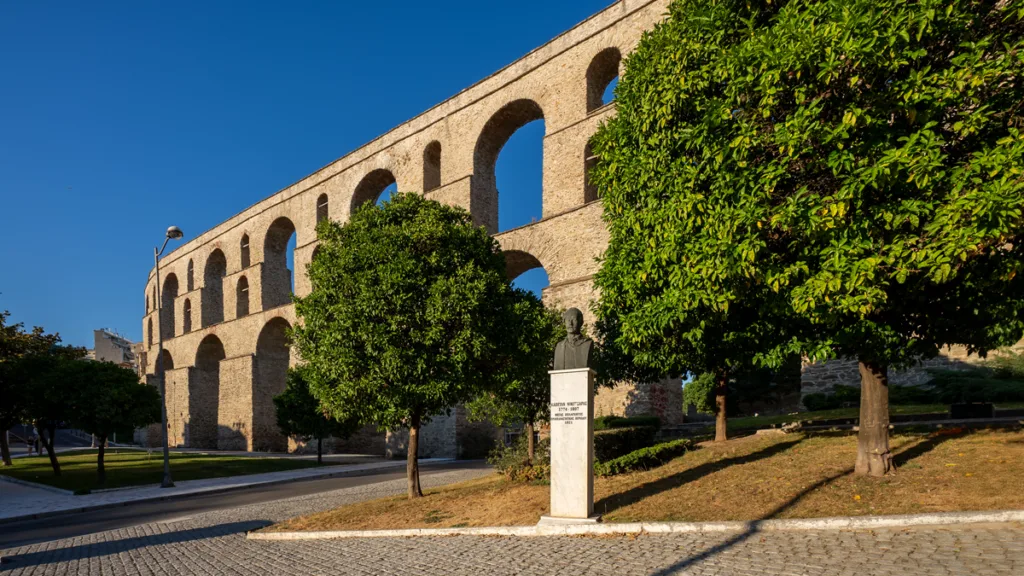
The Kamares is an impressive blend of Roman, Byzantine, and Ottoman architecture. Its design reflects the ingenuity and adaptability of these eras:
- Roman Foundations: Indications of Roman craftsmanship in the lower sections.
- Byzantine Wall: The early 14th-century wall that doubled as a defensive barrier.
- Ottoman Arches: The 16th-century arches replaced the wall, showcasing advanced engineering skills.
The Aqueduct’s Role Through the Ages
The Kamares played a crucial role in Kavala’s development, providing water to the city until the early 20th century. Here’s a look at its journey:
- Byzantine and Ottoman Use: The aqueduct ensured a steady water supply from the Pangaeus Mountains to the dry peninsula of Panagia.
- Public and Private Supply: Water was channeled into public fountains, a few public buildings like the hammam, and private residences.
- End of Functionality: The aqueduct ceased to serve its original purpose in 1911, but it remains a proud symbol of Kavala’s resilience and innovation.
Visiting the Kamares Today
Today, the aqueduct is a must-visit landmark for anyone exploring Kavala. Its towering arches are visible from many points in the city, particularly near the harbor. Walking under these arches offers a glimpse into the city’s storied past and architectural grandeur.
What to Expect:
- Easy Accessibility: The Kamares is easily accessible from the harbor.
- Photogenic Views: Perfect for photography enthusiasts looking to capture historical beauty.
- Scenic Walks: Enjoy a stroll from the aqueduct through the old town up to the fortress, where you can enjoy panoramic views of Kavala.
Conclusion
The Aqueduct Kavala, or the Kamares, is a remarkable testament to the city’s rich historical and architectural heritage. From its Roman foundations to its 16th-century Ottoman grandeur, it reflects centuries of engineering ingenuity and cultural significance. Although it no longer serves its original purpose, the aqueduct remains a prominent symbol of Kavala’s past and a must-visit landmark.
Exploring the Kamares offers a unique glimpse into the city’s history and provides an unforgettable experience for any visitor. Whether you’re captivated by ancient architecture or simply enjoy scenic walks, the aqueduct’s majestic arches are sure to leave a lasting impression. Plan your visit and immerse yourself in the timeless beauty of Kavala. Aqueduct Kavala
Related: Castle of Kavala | History of Kavala | Museums in Kavala
Kavala Partner City Nuernberg
Kavala Partner City Nuernberg Kavalas german partner city A Dynamic Partnership that Transcends Borders Partner city Nürnberg Kavala — this…
Motorcycle Route Kavala 01
Motorcycle Route Kavala Route 01 Motorcycle Route Kavala 01 – The Full Tour 1 Byzantine Water Bridge The Byzantine water…

Aqueduct Kavala
Aqueduct Kavala Explore This Iconic Landmark The aqueduct Kavala is known for — locally called the Kamares — is one…

Kavala Airport
Kavala Airport Your Gateway to Greece Welcome to Kavala International Airport, your gateway to discovering Northern Greece. Whether you are…
Camping Kavala
Best Campsites in Kavala Your Guide to Outdoor Adventure Are you dreaming of a memorable camping trip in Kavala? This…

Chessclub Kavala
Chessclub Kavala A Hub for Chess Enthusiasts Chess Club Kavala Welcome to the vibrant world of the chessclub Kavala! If…

Supermarkets Kavala
Supermarkets Kavala find grocery stores Kavala boasts an excellent selection of highly rated supermarkets Kavala residents rely on daily, each…

Webcam Kavala
Webcam Kavala Live Views of the City Welcome to our page dedicated to the live webcams of Kavala. This coastal…

Weather Kavala
Weather in Kavala Climate and weather conditions Weather Kavala visitors can expect is typically Mediterranean — warm summers, mild winters…